History doesn’t always draw me in, but some events are too thought-provoking to ignore. One of those moments is the final chapter in the life of Benito Mussolini, the infamous Italian dictator whose rule ended in a dramatic and brutal way. The scenes that unfolded in April 1945 paint a vivid picture of a leader whose once-unshakable power had collapsed entirely.
Nearly a decade earlier, Mussolini had stood alongside Adolf Hitler, solidifying an alliance that would come to define both nations during World War II. In 1936, Germany and Italy signed a military pact, the so-called Berlin-Rome Axis, further cemented by Mussolini’s state visit to Germany in 1937. During that visit, he toured German cities with Hitler, attending a military parade in Berlin and projecting a public image of strength and unity. Though both dictators spoke publicly of peace, this alliance set the stage for the war that would erupt just two years later, with Germany launching hostilities in 1939 and Italy soon joining as an ally against Britain and France.
Benito Mussolini's meets Hitler on a state visit to Germany in September 1937.
On April 28, 1945, Mussolini, who had been arrested just the day before by Italian partisans, was executed alongside his mistress, Claretta Petacci. By then, the situation in Italy had spiraled beyond Mussolini’s control. The Allies had advanced into the Po Valley, while Yugoslav partisans led by Tito occupied parts of eastern Italy. Meanwhile, Italian resistance fighters were seizing control of cities across the country. It was clear that the war was nearing its end. In a final act of defiance, SS officers attempted secret negotiations with the Allies, intentionally excluding Mussolini. By the time he learned of the talks, it was too late; German forces in Italy had already capitulated.
Mussolini, ever determined to cling to power, had briefly toyed with the idea of retreating into the Alps to wage guerrilla warfare with 3,000 loyal fascists. But his support had eroded to such an extent that only thirteen followers showed up. With few options remaining, he fled to Milan, hoping to negotiate terms with the Italian resistance. When that effort failed, Mussolini, dressed as a German soldier, attempted to escape to the Italian-Swiss border with Petacci. He joined an SS convoy bound for Austria, but on April 27, 1945, the convoy was stopped by Italian partisans in Musso, near Dongo on Lake Como. Despite Mussolini's disguise – wearing a German uniform and pulling his helmet low to obscure his face – he was quickly recognized by partisan officer Urbano Lazzaro and promptly arrested.
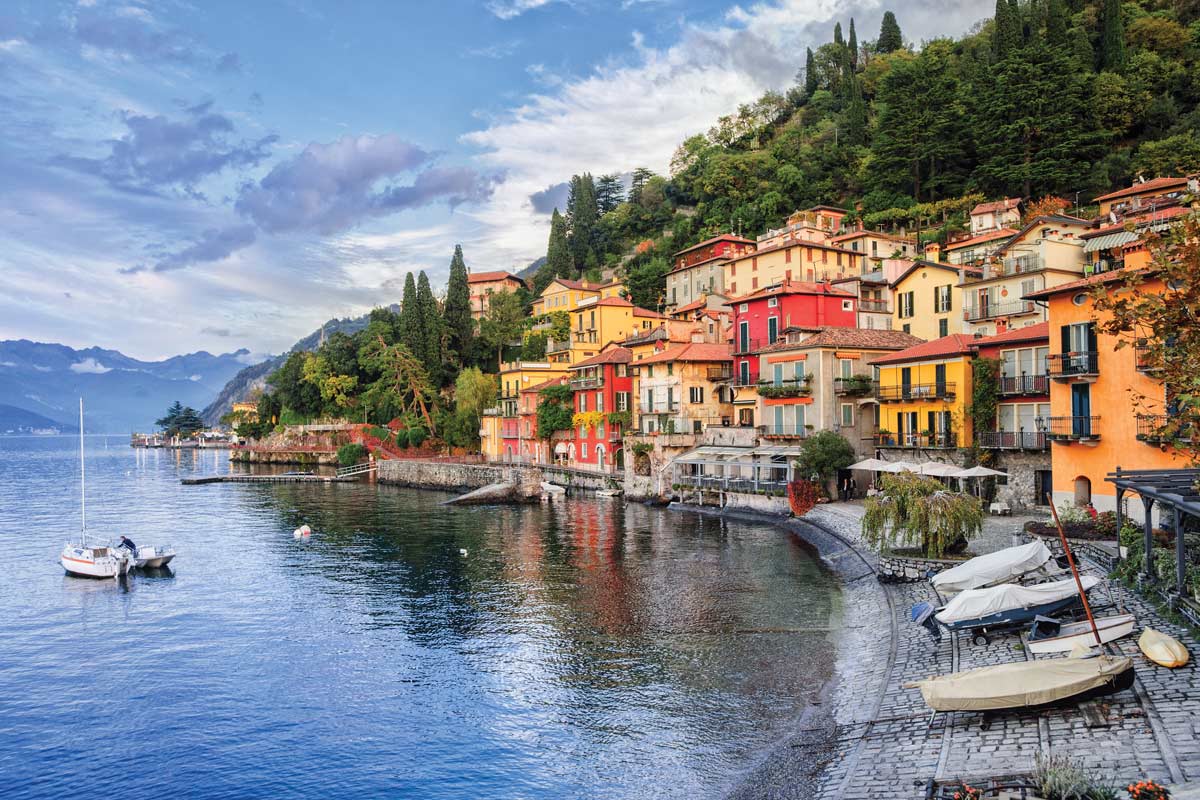 Lake Como, Modern Day: credit [sopranovillas]
On April 28, Mussolini and Petacci were both executed on the orders of the Milanese partisan leadership, the Comitato di Liberazione Nazionale dell'Alta Italia. Several of Mussolini's most loyal followers, including Bombacci, Pavolini, Starace, and Buffarini, met the same fate. Their bodies were transported to Milan, where they were put on public display.
In a grim and symbolic scene, Mussolini and Petacci’s bodies, along with those of three others, were hung upside down by their feet from a gantry at a petrol station in Piazzale Loreto. The crowd, angry and disillusioned after years of fascist rule and the devastation of war, taunted and attacked the bodies in an outpouring of pent-up frustration and fury. The display was a stark message: Italy had finally broken free of Mussolini’s grip.
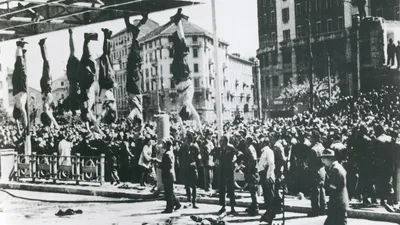
Mussolini and Petacci’s bodies display at a petrol station in Piazzale Loreto: Britannica
Following this public spectacle, Mussolini was buried in Milan. But even in death, he would not find peace. In April 1946, Mussolini's body was stolen – possibly in an attempt to demand ransom. When that failed, the body was quietly returned and reburied in a monastery in Milan. There, his remains lay undisturbed until 1957, when his family arranged for his reburial near his birthplace, the village of Predappio, where his grave remains today.
The death of Benito Mussolini marked the end of an era in Italy. His once-powerful reign had collapsed in such a spectacular and public manner, laying bare the vulnerability of even the most authoritarian leaders.
For the people who had endured years of hardship, his violent end may have felt like a release, a final act of justice in a war-torn nation struggling to heal.